NewsInformation
- Home
- What is victory?
2026.6.10
What is victory?
The future envisioned with Kazushige Kuboki (TEAM UKYO): "What this challenge will show us"
"Even after becoming the best in the world, I still felt it wasn't enough."
That's what Kazushige Kuboki said.
In 2024, he won the UCI Track World Championships scratch race.
Even at the moment he received the rainbow jersey, the symbol of world champion, his gaze was already fixed on his next goal.
What is Kuboki's current focus, and what is his mindset as he continues to compete on the world stage?
Their actions seem to transcend the boundaries of the sport itself, prompting us to question the very nature of growth.
This article focuses on the "present" and "future" that emerged from the interviews.
Kazushige Kuboki's perspective on "the essence of victory"
▼Click here for the interview video
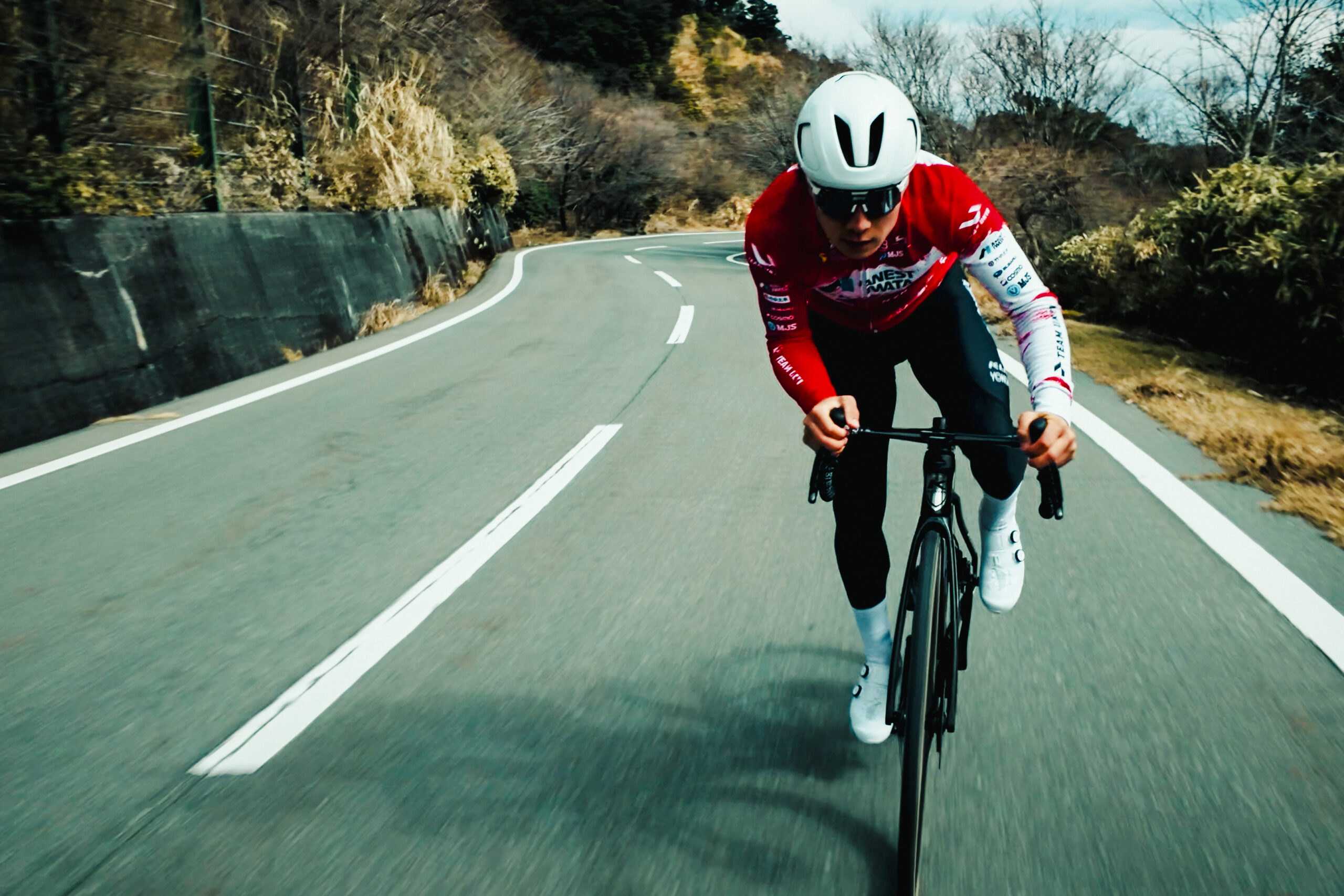
What Kuboki is aiming for now is not just victory as a result.
While aiming to win a medal on the world's most prestigious stage, we are also strongly focused on the "precision" involved in the process.
My goals are specific times for distances like 200m, 1km, and 4km.
How close you can get to each of those details will determine the final result.
It's not about the result in an instant, but about the preparation and accumulation of effort leading up to it.
To compete on the world stage, what matters is the quality of your daily training and the precision you achieve down to the smallest detail.
This attitude remains consistent even in races.
Instead of waiting for things to happen, take action yourself and create the situation.
Taking initiative and controlling the race is what leads to results.
It's not just about the immediate results, but also about how much you can engage with the process.
This attitude applies not only to competition but also to how one should grow in the future.
Beyond being the best in the world
In 2024, he won the UCI Track World Championships scratch race.
Kuboki has earned the "rainbow jersey," the symbol of a world champion.
However, he himself describes the result as "just a stepping stone."
The goal is simply to win a medal at the major competition that comes around only once every four years.
Even the title of "world's best" is not the ultimate goal.
Next up is the 2025 World Championships.
In the omnium, I was in a good position from the start, and I felt confident that I could keep it up.
However, even the slightest lapse in concentration can determine the outcome.
The extra time between events led to slight fluctuations in concentration.
The result was a silver medal.
Despite achieving the highest ranking ever for an elite Japanese male athlete, I still felt like I could have done better.
This experience shows that the gap with the world is not a "huge wall",
It all comes down to those "slight differences in precision" in things like physical condition, judgment, and concentration.
Skill is not the only thing that determines the outcome of a match.
What was most striking during the interview was,
The key point is that the factors that influence the outcome are not limited to just technique and physical ability.
Gratitude towards those around us, awareness of those who support us, and creating a supportive environment.
These human aspects are also directly linked to athletic ability.
Creating a state in which you can concentrate on the competition.
And, to be someone that others want to support.
It's not simply an element for becoming stronger,
This also leads to the question of how we should exist as human beings within society.
Currently, I'm also working on re-evaluating how I use my body.
By increasing the range of motion of the upper body, we are improving pedaling efficiency and pursuing a more reproducible riding style. This accumulation of effort will lead us to the next big stage.
Why support this challenge?
What is consistent in Kuboki's words is,
"I've come to realize that this isn't the stage where I can just focus on becoming stronger on my own."
I will pass on the experience I gained from competing on the world stage to the next generation.
This awareness goes beyond individual performance and enhances the value of the sport as a whole.
The challenges undertaken by top athletes serve as benchmarks for the next generation, inspiring new challenges.
That chain reaction will shape the future of the sport.
And at the same time, the values that are nurtured through competition are
It will also influence the way of life for the next generation.
That is precisely why JPF is supporting Kuboki.
Resources generated within the system of keirin (Keirin)
To inspire top athletes to take on challenges on the world stage.
And through that example, we aim to expand possibilities for the next generation.
Kuboki's challenge is not limited to individual achievements,
It has the power to influence the very future of the sport.
Challenges lead to the future.
Daily effort, the pursuit of precision, and creating the right environment.
Results can only be achieved by consistently performing all of these elements at a high level.
Kuboki continues to evolve even now.
That challenge is not limited to one person,
It will spread to the next generation and to the sport as a whole.
JPF supports that challenge,
We will work to shape the future of cycling.
The experiences and values nurtured within that environment are
We believe this will broaden the possibilities for the next generation.
Riding a bicycle, competing in sports.
How will each of these experiences contribute to our growth?
Kuboki's example poses that question to us.
Furthermore, Kuboki's journey and background are introduced in detail in the following interview series.
Turning points during his student days and the origins of his aspiration to become a member of the Japanese national team.
https://www.cyclesports.jp/topics/147466/
His time as a professional road cyclist, and his journey of repeatedly taking on challenges in search of more demanding environments.
https://www.cyclesports.jp/topics/149760/
The changes that occurred after the national team selection process, the experiences at Keirin rider training school, and current challenges.
https://www.cyclesports.jp/topics/150454/